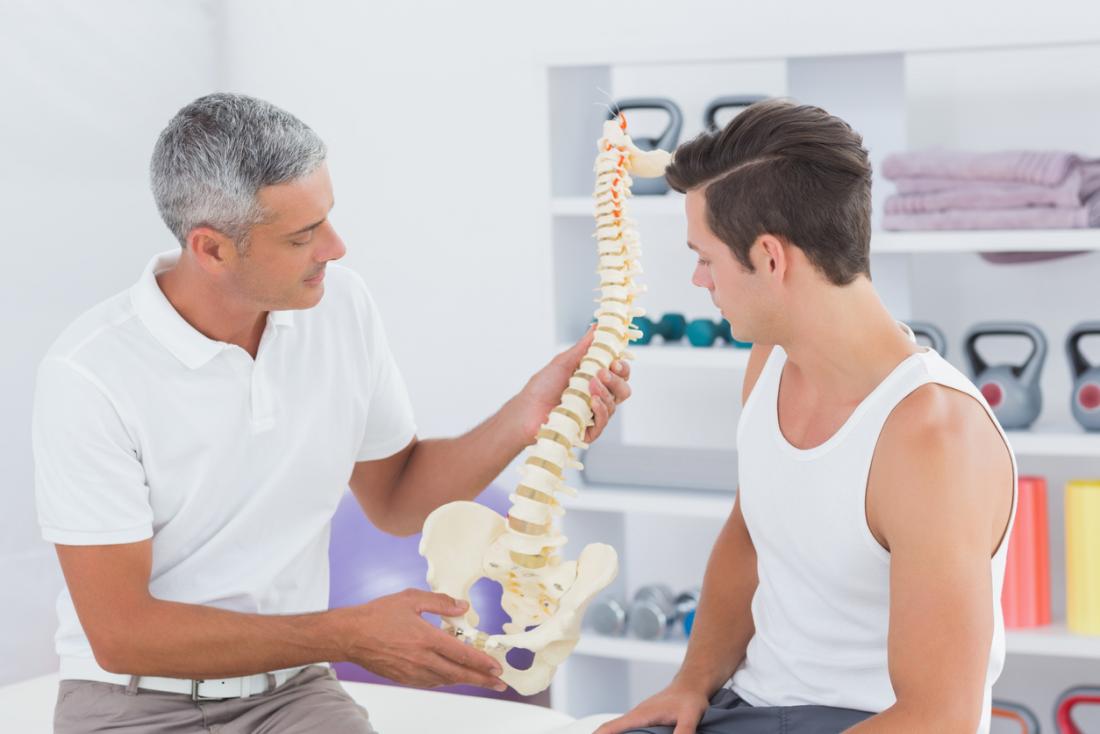
Chronic pain in the spine is one of the most frequent causes of a decrease in the quality of life. For years, patients undergo courses of drug therapy, physiotherapy, blockades, and sometimes surgical interventions. However, even with a decrease in pain intensity, a feeling of stiffness, instability, and periodic exacerbations often persists.
In such cases, it is important to go beyond the local symptom and consider the patient holistically.
Chronic pain as a state of the system
From the point of view of osteopathy, chronic pain in the spine is not only a problem of the intervertebral disc, facet joint or muscle spasm.
This is a reflection of a global violation of body biomechanics and stable compensatory patterns.
The spine does not function in isolation. It is connected:
• with the position of the pelvis and lower limbs
• with the state of the diaphragms of the body
• with visceral structures
• with the craniosacral system
• with fascial continuity of the whole body
If a primary dysfunction occurs in the system — trauma, scar changes, impaired mobility of organs or cranial structures — the body is rebuilt. Compensation is formed. Over time, it is the compensatory zone that becomes the source of chronic pain.
Holistic approach
The holistic approach involves assessing the patient as a single structure, where:
• structure and function are interconnected
• local pain may have a distant cause
• chronic tension is supported by impaired tissue mobility
The task of the osteopath is not only to reduce the pain syndrome, but also to identify the key dysfunction that supports the pathological pattern.
What does an osteopath do?
During the reception, a complex osteopathic diagnosis is carried out:
• analysis of global postural balance
• assessment of mobility of spinal segments
• study of fascial chains
• assessment of the mobility of the pelvis and sacrum
• diagnosis of diaphragmatic restrictions
• analysis of visceral and craniosacral mobility
Often, the source of chronic pain in the lower back can be associated with the restriction of the mobility of the pelvic diaphragm, the adhesion process after operations, a violation of the mobility of the chest or dysfunction of the cervical-occipital junction.
Osteopathic correction
Treatment is aimed at:
• elimination of somatic dysfunctions
• restoration of physiological mobility of segments
• normalization of fascial tension
• balancing of the pelvis and sacrum
• improvement of tissue trophism
Soft manual techniques are used: myofascial release, functional and articulatory methods, craniosacral therapy, visceral correction.
It is important to understand: the goal of osteopathy is not to “correct” the spine, but to restore the harmonious distribution of the load in the system.
The result of a holistic approach
When the system works, it is noted:
• decrease in the intensity of chronic pain
• decrease in frequency is aggravated
• increase in the volume of movement
• improvement of postural balance
• increasing the general stability of the body
When the primary limitation is eliminated, the body stops maintaining compensatory tension, and the pain syndrome gradually loses its chronic nature.
An osteopath in the holistic model of treatment is a specialist who helps the body get out of the closed circle of compensations and restore physiological freedom of movement.
Chronic pain is not only about the spine. It’s about the system.
And it is necessary to work with it holistically.
Zdravnik-traumatologist, osteopath Sergiy Granenko