BASIC PH: an Israeli technique that helps a person cope with stress
In the modern world, people are used to looking for universal recipes for psychological resilience. But the truth is that the same support works differently for everyone.
It is on this principle that the Israeli BASIC PH technique is based – a stress coping model created by Professor Muli Laad.
This system helps to understand:
how exactly a person reacts to a crisis, where he gets internal resources and why what saves one person may not help another at all.
What is BASIC PH?
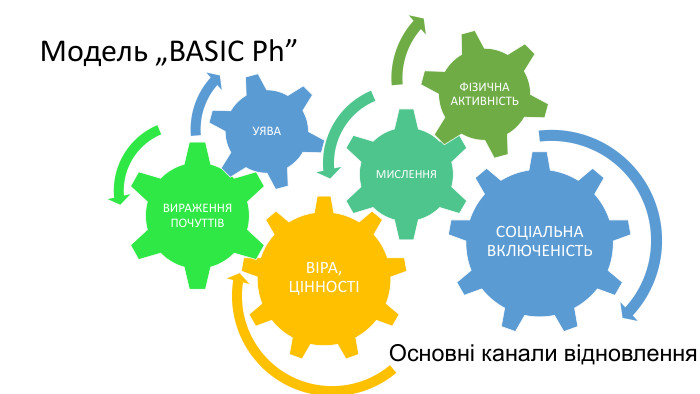
BASIC PH is a model of six channels of psychological resilience.
The name consists of the first letters of the English words:
B — Belief (belief, values)
A — Affect (emotions)
S — Social (social contacts)
I — Imagination (imagination, creativity)
C — Cognition (thinking, logic)
Ph — Physiology (body, physical activity)
The methodology explains:
each person has their own dominant way of experiencing stress and recovery.
For some people, the main support is:
spirituality;
life principles;
faith;
a sense of meaning.
That is why in difficult moments they look for answers in philosophy, religion or inner convictions.
When a person knows the “why”, it is much easier to endure the “how”.
2. Affect — emotions
There are people who need to talk about their feelings.
They cope with stress through:
tears;
conversations;
support;
emotional living.
For them, the phrase “don’t think about it” sounds almost like a psychological crime.
Emotions are not weakness. It’s the nervous system’s way of experiencing stress.
3. Social — people and support
Some people recover only through contact with others.
What matters to them is:
team;
family;
friends;
the feeling of “I’m not alone.”
That’s why isolation often becomes the hardest test for them.
4. Imagination — creativity and imagination
For creative people, the resources are:
drawing;
music;
humor;
fantasy;
metaphors.
Even in a crisis, they intuitively create new images and meanings.
Sometimes creativity saves the psyche where logic is already powerless.
5. Cognition — logic and structure
This type of people stabilizes through:
analysis;
planning;
information;
clarity of action.
When the world becomes chaotic, they seek control through understanding processes.
It is these people who often make lists, schedules, and plans in times of crisis.
6. Physiology — body and movement
For many, the main anti-stress is the body.
The resources are:
sports;
breathing;
sleep;
movement;
physical activity.
The body is often the first to react to anxiety. And through the body, a person can regain a sense of security.
Why is the BASIC PH method so effective?
Because it does not force everyone to be the same.
Some people are helped by:
prayer,
some by running,
some by friends,
and some by silence and drawing.
And all of this is normal.
The BASIC PH method eliminates the main mistake of modern psychology:
the expectation that there is one correct way to experience a crisis.
Where is BASIC PH used?
Today, the model is actively used by:
psychologists;
psychotherapists;
crisis consultants;
educational systems;
military psychologists;
support services in conditions of trauma and war.
It has become especially effective in working with people after severe stress and traumatic events.
BASIC PH is not just a psychological theory.
This is a reminder:
each person has their own path to inner stability.
Sometimes it is enough not to “break yourself”, but to understand:
because of what exactly your psyche is able to recover.
Because the strength of a person is not in the absence of stress.
But in the ability to find support even during a storm.
Psychotherapist, crisis psychologist,
Rimma Shtubler (Vatutina)