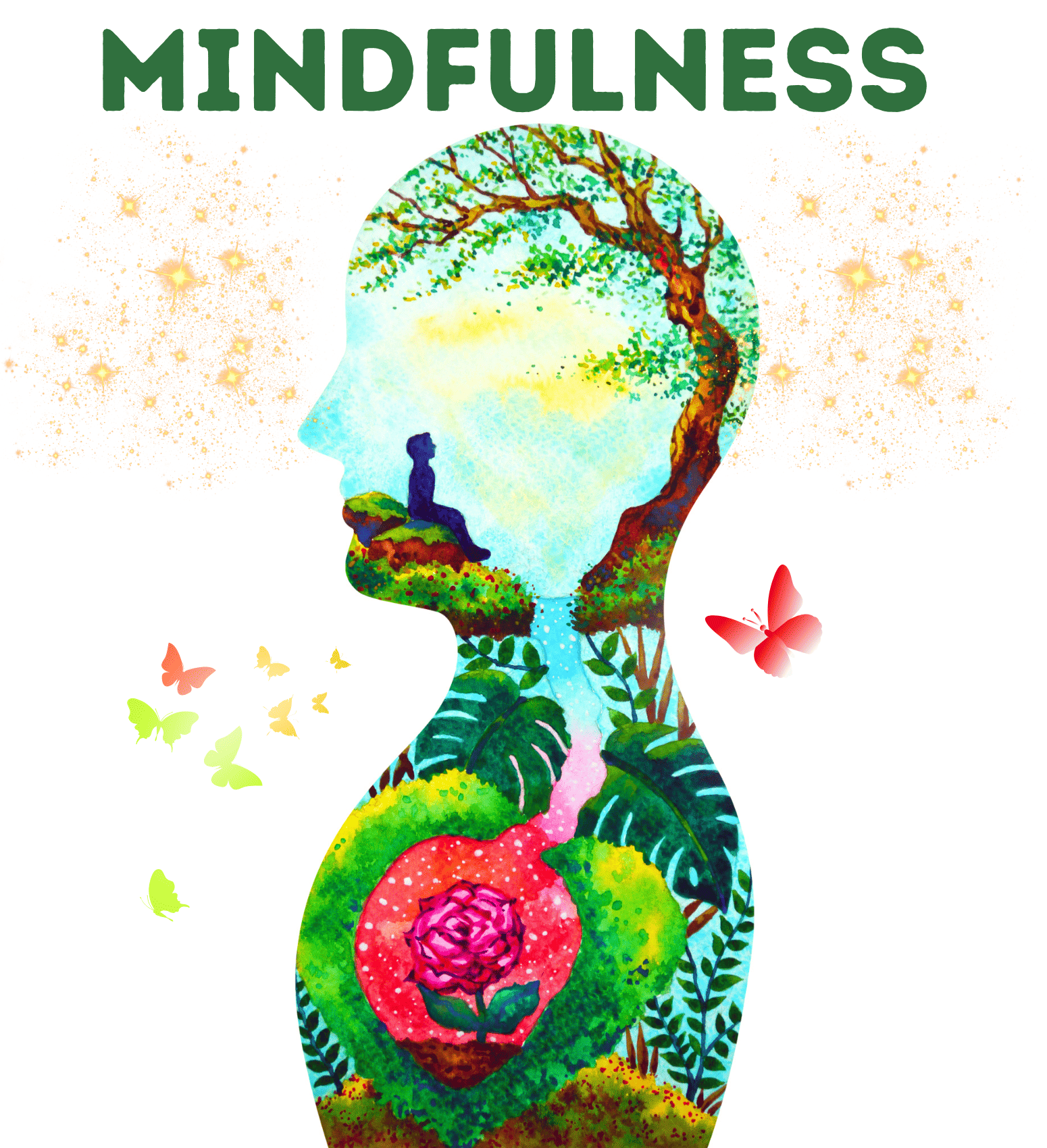
In a world where stress has become background noise, and trauma is not the exception, but the experience of many, mindfulness seems almost too simple a solution. Sit. Breathe. Be here.
Skeptics chuckle: “Is that all?”
Yes. And at the same time, no.
Mindfulness is not a relaxation technique or a way to “calm down at anything.” It is the ability to be in touch with the present moment without avoidance and without struggle. And this is what people with trauma and chronic stress often lack.
“Between stimulus and response, there is a space. In that space is our power of choice.”
— Viktor Frankl
What happens to the psyche during trauma and stress
Trauma is not an event. It is a stuck reaction of the nervous system.
The body lives in “danger” mode, even when the threat has long passed.
The mind is either in the past (memories, flashbacks) or in the future (anxiety, catastrophizing).
Stress is the younger brother of trauma. Less dramatic, but no less exhausting. It slowly teaches us to live “on automatic mode”, turning off sensitivity to ourselves.
And here mindfulness does a quiet but radical thing: it returns a person to the present body and the present moment.
Why mindfulness works with trauma
It reduces the reactivity of the nervous system
Regular practice helps reduce hyperactivation (fight/flight) and dissociation. A person gradually learns to notice, not to fail.
It restores a sense of control
Trauma takes away choice. Awareness returns it:
I can stop, feel, choose a reaction.
It creates a safe distance from pain
Mindfulness does not force you to “experience it again.” It teaches you to see:
“Here is the anxiety. It is there. But it is not me.”
It restores contact with the body
And the trauma lives right there. Through breathing, sensations, and micromovements, mindfulness helps the body complete what was once interrupted.
Benefits for chronic stress
With stress, mindfulness:
reduces cortisol levels
improves concentration
reduces emotional burnout
restores the ability to feel pleasure (yes, it has not disappeared — it is muffled)
And most importantly, it teaches you to live, not to constantly catch up with life.
An important caveat
Mindfulness is not a panacea or a “spiritual band-aid.”
In case of deep psychotrauma, it should be:
adapted
dosed
preferably accompanied by a specialist
Because awareness without safety is not therapy, but re-traumatization.
In conclusion
Mindfulness does not promise that the pain will disappear.
It offers something more honest: the opportunity to be with yourself, even when it hurts.
And this is the beginning of healing.
“You are not obligated to be calm.
You are obligated to be alive”
And mindfulness is exactly about this.
Doctor-psychotherapist
Rymma Shtubler