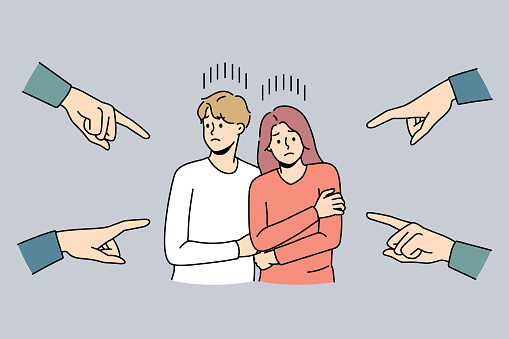
1. What are psychological defenses and why are they needed
Psychological defenses are an automatic way for the psyche to reduce internal tension, anxiety, or pain when reality becomes too difficult to directly experience.
It is important to emphasize: defenses ≠ pathology.
All people use defenses. The question is not whether we protect ourselves, but:
how automatically;
how often;
how adequately to the situation;
whether the defense helps to adapt or, on the contrary, creates new problems.
How defenses are formed:
arise as a way to cope with anxiety;
are largely formed in childhood;
are associated with the experience of relationships with loved ones;
are fixed if they once helped to survive a difficult situation;
in adulthood they can be automatically triggered even when the old threat is no longer there.
Defenses were once a solution. The problem begins when the old solution is applied to a new reality.
2. Primary and secondary defenses according to Nancy McWilliams
McWilliams conditionally arranges defenses according to the level of maturity and complexity of the functioning of the psyche.
Primary (primitive) – arise earlier, work more automatically and are often associated with a violation or simplification of the perception of reality.
Among them:
denial;
projection;
splitting;
primitive idealization and devaluation;
projective identification;
dissociation, etc.
Secondary (more mature) – allow you to better maintain contact with reality and integrate contradictory experiences:
repression;
intellectualization;
rationalization;
isolation of affect;
reactive formation;
sublimation;
humor;
altruism, etc.
An important nuance: mature defenses do not mean “never use primitives.” In a state of severe stress, even a psychologically mature person can temporarily regress to simpler defense mechanisms.
3. The first three primary defenses — in more detail
1. Denial
The psyche does not allow the realization of a fact or its emotional meaning, which is too painful.
Example:
“Yes, he yells at me, but in fact he treats me very well.”
Key question:
“What can a person not allow themselves to see or admit?”
🔹 2. Projection
One’s own unacceptable feelings, desires, or impulses are attributed to another person.
Example:
A person is angry themselves, but says:
“You’re the one who’s angry with me!”
Or:
“They hate me,” when in fact I feel strong hostility towards them.
Useful question:
“Can what I see in another person partly belong to me?”
🔹 3. Splitting
Conflicting characteristics of a person or oneself are not integrated into a single whole, but are divided into “very good” and “very bad”.
For example:
“She is the best person in the world!”
↓
“She is terrible, I will never talk to her again!”
Without intermediate shades.
It is especially important to learn to notice sharp changes in the assessment of a person depending on whether they have met our expectations.
4. Transition from maladaptive to adaptive defense
The goal is not to “get rid of defenses”. This is impossible and unnecessary.
The goal is to learn to notice the automatic reaction and create space for choice.
A simple scheme:
Trigger → automatic defense → pause → awareness of the emotion → reality check → more adaptive response.
For example:
“She is ignoring me”
→ projection/interpretation
→ “What am I feeling now?”
→ “I’m afraid of being rejected”
→ “Is there evidence that she rejects me?”
→ “I can ask directly, instead of jumping to conclusions.”
Psychological maturity is not the absence of defenses. It is the ability to notice: “Now my defense is speaking,” and not let it automatically control my behavior.
Psychotherapist, crisis psychologist Rimma Shtubler (Vatutin)